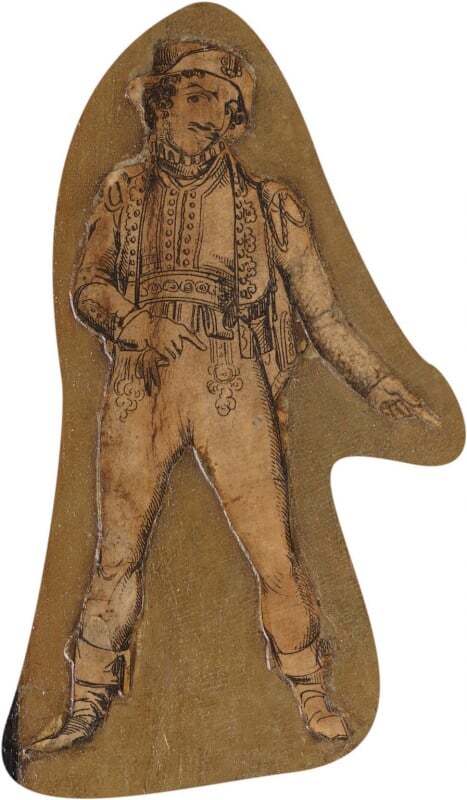
Billy Waters

- Artist: Unknown artist
- Date: circa 1840
- Medium: glazed earthenware
- Dimensions: 8 1/2 in. x 3 1/8 in. (216 mm x 80 mm) overall
- Portrays: Billy Waters
- Museum: The National Portrait Gallery
- Collection record: The National Portrait Gallery website
Listen to the free audio guide
About this artwork
In this glazed earthenware figurine from around 1840 you see a small bust of Billy Waters, an actor and musician. The figure is only about eight‑and‑a‑half inches tall, but it holds a surprising amount of detail. You’ll notice the dark pigment used for his skin—an intentional convention in Staffordshire ceramics for Black sitters of the time. His face is rendered from prints that appeared in 19th‑century newspapers, showing how popular figures were copied into everyday objects.
The ceramic comes from northern England’s potteries that produced countless busts and figurines for homes, not just gallery walls. This piece reminds us that portraits lived on tabletops and mantelpieces as well as on canvases. The National Portrait Gallery has recently added this kind of small porcelain portrait to a new collection area, thanks to an Art Fund award. It’s a neat example of how media‑derived images turned into household treasures in the 1800s.
See it in person
Billy Waters is in the collection of The National Portrait Gallery at St Martin's Place, London — free to enter. Point your phone at any artwork there and audioguide.london plays a free audio guide in six languages — no app download needed.