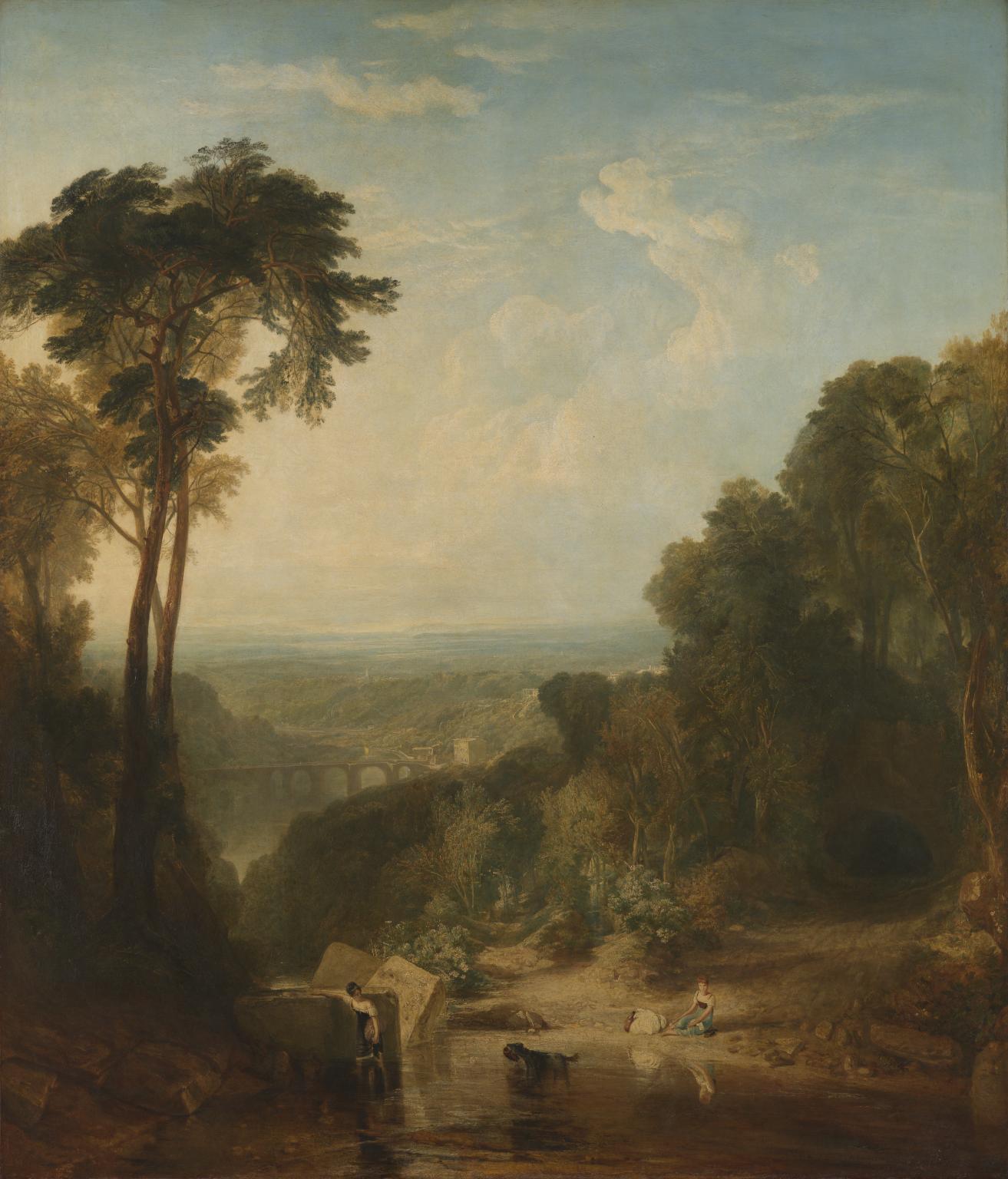
Crucifixion

- Artist: F.N. Souza
- Date: 1959
- Medium: Oil paint on board
- Dimensions: support: 1831 x 1220 mm
- Museum: Tate Britain
- Collection record: Tate Britain website
Listen to the free audio guide
About this artwork
This is the “Crucifixion” by F.N. Souza, painted in 1959 with oil on board. Souza, born in Goa to Indian parents and raised as a Roman Catholic, later moved to Britain and developed a stark, secular view of life and suffering. The work shows Christ as a masked, skeletal figure, rendered in dense black and dark blue pigments. The saint’s limbs extend to the very edges of the canvas, turning the frame itself into the cross.
The painting captures Souza’s internal struggle with faith—his religious upbringing clashing with his modern, often brutal perspective on existence. Art historians link it to the post‑colonial condition, noting how the stark, deconstructed form echoes modern European painting while commenting on inherited belief. Comparisons have been made to Graham Sutherland’s post‑war crucifixions and the visceral intensity of Francis Bacon’s later works. The image’s rawness invites the viewer to confront pain, suffering, and the complexities of spiritual identity.
Souza’s choice to portray Christ in stark black rather than the traditional white underscores his break from Western iconography, making the scene a powerful statement on the intersection of personal doubt, cultural history, and the universal human experience of suffering.
See it in person
Crucifixion is in the collection of Tate Britain on Millbank, London — free to enter. Point your phone at any artwork there and audioguide.london plays a free audio guide in six languages — no app download needed.