Self Portrait at the Age of 34
- Artist: Rembrandt
- Date: 1640
- Medium: oil on canvas
- Museum: The National Gallery
- Collection record: The National Gallery website
Listen to the free audio guide
About this artwork
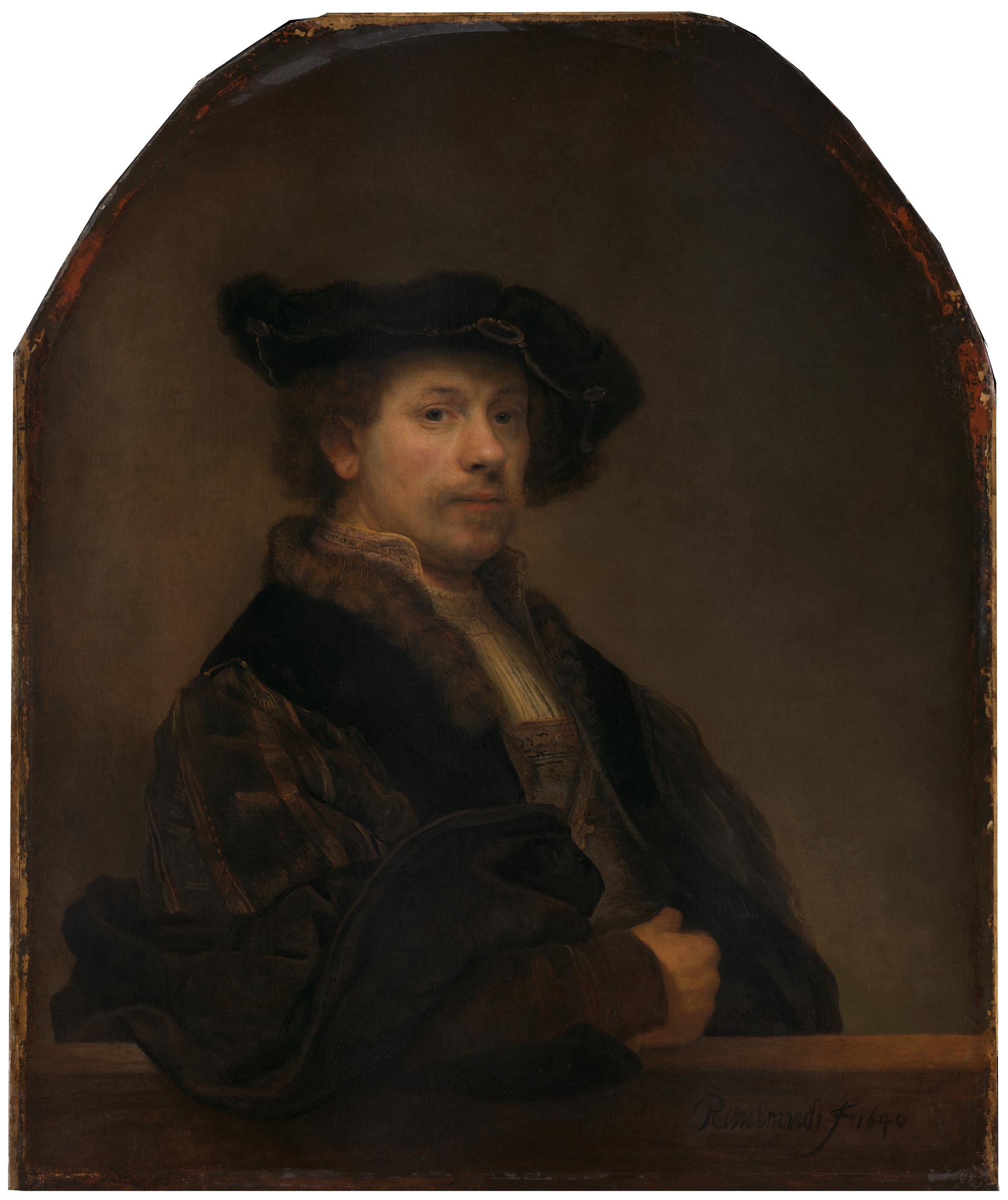
This is "Self Portrait at the Age of 34" by Rembrandt. We see the artist in confident pose – self-assured, dressed in expensive-looking fur and velvet, his hat laced with jewels. He's wearing clothes from the 1520s, but he's a Dutchman living in the 1640s. The pose is based on paintings by Dürer, Titian, and Raphael from a similar date.
Rembrandt is portraying himself as a Renaissance gentleman, paying homage to and comparing himself with the most famous artists of that time. He's claiming a higher social status than was usually afforded to artists at the time, implying he's their equal. The implications of this double echo would have been understood by his sophisticated clientele.
We see him relishing his success, probably made for just such a client who wanted a fashionable portrait in Amsterdam in 1640. His contemporaries would have noticed that his costume may be impressive, but it's very old-fashioned. He's using an age-old artist's trick or illusion – the wall at the bottom of the painting deepens the perspective, making it seem like a window onto reality.
Rembrandt appears to have derived the positions of the parapet and arm from a portrait by Titian, and there are echoes too of a self-portrait by Dürer. The shape of the figure and colours used are similar to a portrait by Raphael. By citing these works, Rembrandt is implying he's their rightful heir and equal. He also seems to be asserting his mastery by demonstrating his ability to emulate the smooth finish of his Renaissance predecessors – a style quite different to his usual energetic brushstrokes.
See it in person
Self Portrait at the Age of 34 hangs in The National Gallery on Trafalgar Square, London — free to enter. Point your phone at any artwork there and audioguide.london plays a free audio guide in six languages — no app download needed.